
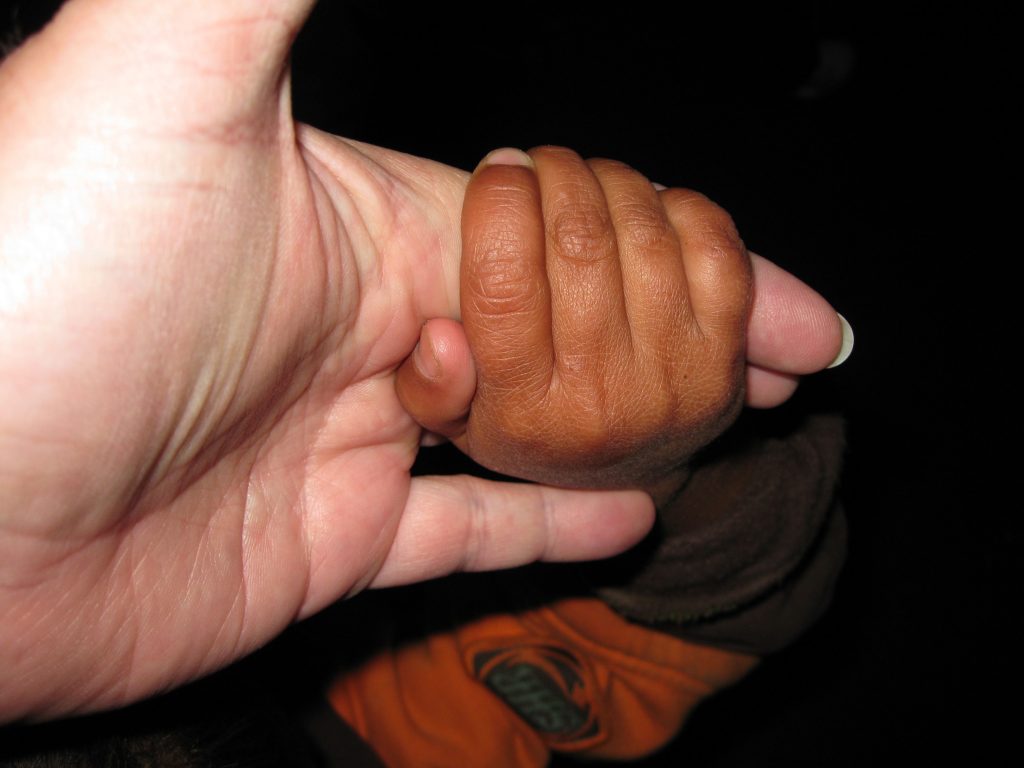
If you look up the word “gullible” in the dictionary, do not be surprised if you find my picture provided as an example. I have a tendency to give people the benefit of the doubt until they prove to be untrustworthy. Some call it being attentive, compassionate, or big-hearted. Gullible may be the unvarnished description. I prefer to think of it as kindness.
Years ago while walking down a Chicago street to my hotel, a short man with thick-lensed, coke-bottled glasses and a faded army coat asked for change to purchase the subway fare home. His car, which he was standing beside at the curb, had broken down (well, he was standing beside “a car”; who knows if it belonged to him?). It was a cold, windy night. Rather than give him a quarter and leave him working for more, I asked how much the total fare was. It was a small amount, maybe three dollars. I have had car problems before. They are no fun, especially after hours . . . and even less so when it occurs during inclement weather. I gave him the price of the whole fare so he could get out of the cold. It seemed like a good thing to do. The stranger was most grateful, and I continued to my hotel. The next night as I again walked down that same street to my destination, I was shocked to see those coke-bottled glasses working the street again! I confronted him about his lies from the previous night; he, of course, denied knowing anything about it.
Given the option to do a kind thing or nothing at all, I often do the kind thing even if it is not necessary. Honestly, this practice is mildly perturbing. Don’t misunderstand—I can and do turn a blind eye to many panhandlers, and in the process I may well overlook genuine occasions of need. But I am so tired of manipulative appeals from non-profits that siphon off questionable amounts of gifts for “administrative overhead.” Many of us are understandably both weary and wary of appeals for assistance (i.e., television commercials, glossy direct mail, personal requests on streets), but those are not states of being I am willing to let rule the day. Human need and the potential to make a difference capture my attention. I imagine that is why I can easily make a list of moments like the one that occurred on the Chicago street. Moments when I feel something stir within me that cause me to think that, perhaps, I am being nudged to care in a way that lightens another’s burden.
These experiences have prompted me to reflect from time to time on the value of kindness. What is not to like about kindness? It is soft, gentle, and helpful. It is not necessarily costly though that varies according to the gesture made. But as it has been observed in folk wisdom handed down, “It is more difficult to be kind than clever.” At a minimum, I take that to mean the first challenge to kindness is an internal one where we must overcome the urge to outsmart, outfox, or out do others for our own gain, choosing instead to be collegially or cooperatively helpful.
If we are fortunate enough to prevail in that internal skirmish, it is important to recognize that kindness requires more than one’s intention. It is a bit like the old joke about the scout who helped the elderly person across the street. That was intended as an act of kindness, only the person did not want to cross the street! Just because we intend something to be kind does not guarantee that it will be received that way. During one period of our marriage, as part of the division of labor I washed and dried the laundry, while Judi folded and put it away. One day in preparation, I carried clothes to the laundry room, dumped them on the floor and sorted things into piles. Whites. Colors. Reds. Etc. When I returned to start the first load of laundry, all the items had been returned to one huge pile. I asked Judi, “Did you put all of these items into one pile?”
She responded in the affirmative, obviously happy with her good deed.
“Why would you do that?” I wanted to know.
She said, “I was being kind and helpful.”
Well, not really! Unsorting sorted laundry does not pass the kindness test—at least not on that day! It was a nice thought and I appreciated her intent, but some acts of kindness just aren’t, no matter how good intentioned they are. After a good laugh, I teasingly asked if there was anything else she intended to help with that I should know about!
One would not think that kindness could be so complicated, but it can be. Things like lack of understanding the other’s predicament, cultural differences that lead to miscommunication, unintended offense . . . there are numerous reasons why it is easier to ignore it all and avoid the headaches. But on the flip side of that coin, sometimes we discover that over time the absence of kindness creates deep scars in a relationship. I knew a couple who had built a seemingly successful, strong household over many years together. One day the husband announced that he had filed for divorce, having found someone else with whom he desired to share his life. The wife was understandably crushed and furious. A good attorney negotiated that the wife would receive 90% of their assets in the divorce settlement, should they proceed. With that, she felt certain that her husband would not leave her. There was no way he would walk away from those assets. She had won this battle and saved the marriage. Only she had not. The husband agreed to take only a 10% portion without protest, which of course raised the nagging question, “Why? What is it about this other relationship that would motivate relinquishing 90% of one’s assets?” The response was memorable. The other person was kind. She was gentle. She took time to for simple things like talking at the end of the day, and holding his hand.
There is usually more to a story than a third party ever knows. Without supporting either side, what stayed with me from those conversations was the power and importance of kindness. Without it, seemingly solid relationships can crack and crumble. With it, a person’s world takes on a wholly different ambiance, potentially leading to a transformation of attitude and demeanor.
I have witnessed the impact of kindness upon people, especially in children. Those who primarily hear criticism and ridicule often internalize those messages to the point that their self-esteem is chipped away and their demeanor is dampened. Into that downward spiral, the introduction of just one affirming voice can have an amazing influence. Like light at the end of the tunnel, it provides a guide point toward which the child hastens. Temperament and work ethic alike can change; they may even begin to excel in talents and abilities they had never before exhibited.
The effect of kindness is not limited to children and we are fools if we believe that adults do not respond similarly. For instance, it is true with adults in the workplace. In the field of leadership studies, a growing number of voices recognize that so-called soft skills like kindness are beneficial to organizational health and do not necessarily compromise organizational objectives or undermine a leader’s authority.
While one small kindness will not resolve all the world’s aches and pains, it can be the first step toward new perspectives and possibilities. A few years ago there was a trend referred to as “random acts of kindness.” These were sometimes small acts, like paying for the fast food order of the car behind you. They could be not so small acts as well, like taking an extra job to anonymously pay bills of a family member, or generously paying for the Christmas lay-away purchases for all customers at a store. The hope was that one small act would inspire another, multiplying in their effectiveness. (It turns out there is now a Random Acts of Kindness Foundation, which promotes a day or even a week for practicing Random Acts of Kindness outside of one’s comfort zone.) I think random acts of kindness are great. They are inspirational; I like to imagine that they send ripples of goodwill into the community. But there is a shortfall if this is our only strategy. Random acts leave large gaps between experiences of kindness. So these days, I want to advocate for something like Regularized Acts of Kindness or Continual Acts of Kindness. Who knows? A bit of kindness spread widely might help take the edge of the highly reactive, defensive mood our society is experiencing.
It may well be that I am indeed gullible to think that kindness can be such a leaven in the loaf, but I prefer to think there is a divine prompt behind these apparent gullible actions. Kindness is more than merely being nice; it is an opportunity to participate in the work of the Spirit among us. Kindness is not the least I can do; it ranks among the best that I can do for another. Whenever I experience a time of need, I know how valuable it is to find someone who will respond to my story. Even with the possibility of being hustled from time to time, I am of the opinion that kindness is worth the risk.

You must be logged in to post a comment.