
Social media has become such an ingrained feature of life for millions of people that a host of posts appears in our daily newsfeeds. Status updates sharing whereabouts, food choices, celebrations and frustrations, and a variety of commentaries are waiting each morning to help us start our day. Perhaps it is for that reason that as I strolled through a cemetery recently, it occurred to me that in a pre-social media world tombstones were like one’s final post. Given one last opportunity to make a statement or suggest how one wants to be remembered, what would we say? I heard someone once quip that their epitaph should read, “See, I told you I was sick!”
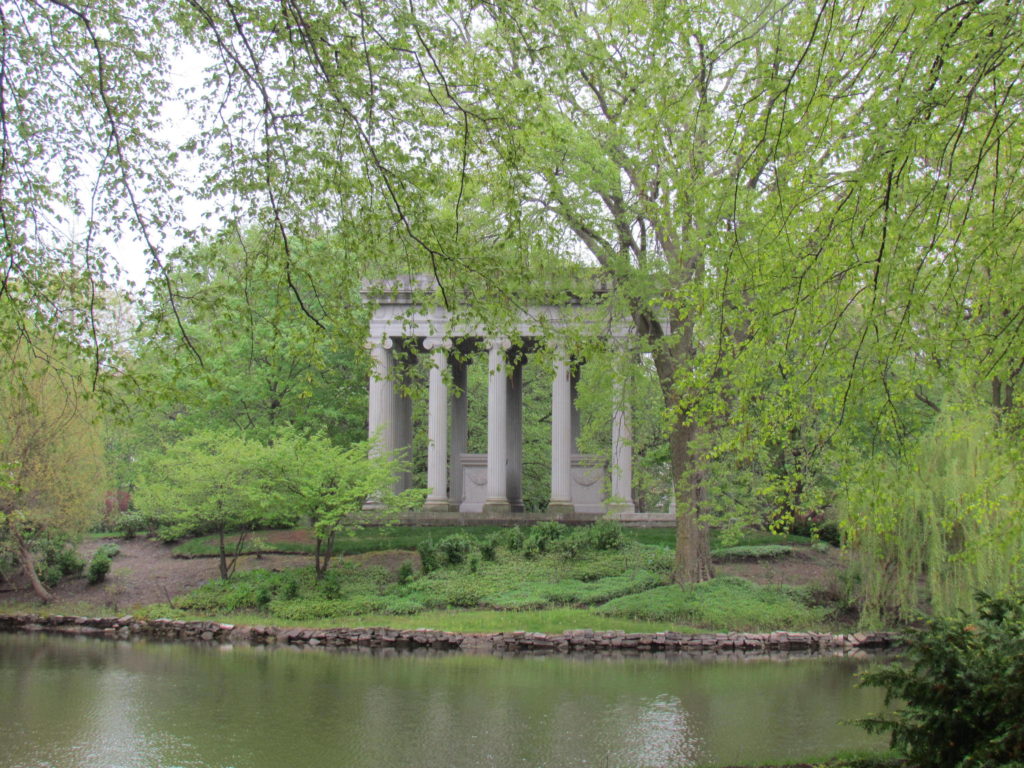
You may wonder why I was strolling through a graveyard anyway. Thanks to my wife’s diverse reading habits, I have become acquainted with a book titled “199 Cemeteries to See before You Die.” I do not expect to locate them all, but it did lead us to visit one of them, Graceland Cemetery, during a recent trip through Chicago. I must say, if you have to cross over to the other side and are looking for paradisiacal setting where you can lay your remains, this one could make your short list. Who knew any place in the Windy City could be that quiet and peaceful? With its mature trees, abundant lilacs, and tranquil lake, visitors may well wish they had packed a picnic lunch.
Graceland memorializes some significant pieces of Chicago history. People like George Pullman (think Pullman sleeping railway car), Potter Palmer (19th century real estate developer), Marshall Fields (founder of Marshall Fields department stores), and even Ernie Banks (of Chicago Cubs fame) are buried here. In many cases, it is inadequate to call these tombstones. Their markers are massive—monumental in effect. Palmer may take the prize for best view in the afterlife. His marker is a huge, Parthenonesque structure located on the banks of the water. Few of us get a lake view in life, let alone in death!
I intentionally use the word “monument” rather than “tombstone” to describe many of these markers. These are not simple stones with inscribed names and dates. They far exceed the usual custom of choosing one or two etched symbols, like ivy or a decorative cross. And, it is the extreme opposite of an earlier Quaker practice of simple burial stones with an eighteen-inch height limit, or even no marker at all. These monuments do more than indicate the location of the grave. At the very least they give testimony to the wealth of the individual. I suppose their size and grandeur matches their prominence in life and seeks to preserve a memory of how their achievements helped advance society in their generation.
While I confess these mega markers seem a bit ostentatious to me, I cast no aspersions at them. They did, however, prompt me to wonder . . . . If a tombstone is a bit like one’s final post or status update, how would we choose to be remembered? In earlier times, certain symbols were frequently chosen – anchors (hope) clasped hands (unity, or being received), boats (crossing to the other side), a dove (peace), and butterflies (metamorphosis), for instance. They represented things the deceased valued or hopes they carried with them. One creative stone resembled half of a house, with the other part appearing to have been torn away—an apt representation of how death often leaves survivors feeling after losing a loved one. Some of these traditional symbols continue to be used, but these days, people often choose to blaze their own paths, representing their hobbies and passions – motorcycles or favorite trucks, for instance. Ernie Banks’ marker is adorned with signs of his baseball career.
On occasion, those who mourn and reminisce decide how to remember the deceased. During a recent visit to Francis Bavier’s grave in my home town of Siler City, I was surprised to find several jars of pickles left at the base of her stone. Fans of The Andy Griffith Show may remember the episode where Aunt Bea’s home canned pickles tasted like kerosene but no one had the heart to tell her. Aunt Bea may not have chosen to be remembered for her pickles, but that is how some fans pay tribute to her!
I wonder if the desire to be remembered is nearly universal. Why else would we create places of beauty to house our earthly remains and mark our places so that we can be found? Some would say that humanity has an innate desire to be immortal, with children, and names on buildings being ways to make sure our memory survives our death. Yet, it seems pretty certain that unless we have been a mover or shaker in society, there is a good likelihood that most of us will be forgotten within two to three generations unless tributes in public places keep our memories alive. Even knowing that will not likely deter us from trying to outwit oblivion!
So when it comes time to make that final post, for those who come to pay an immediate tribute and for those who care enough to recall for years to come, how might you want to be remembered? The things worth remembering are seldom the fortunes one accumulates. Rather, it is the vision that motivated you; the philosophy that grounded you. It is the love you shared and the causes you fought for. It is the many ways you contributed to intersections of life where you met other people and made a difference in that moment. While impressive monuments can be artistic beauties, it is unlikely they rank near the top of the “what matters most” list. Rather, in the million moments between and beyond social media updates and the inevitable “final post” are the opportunities to create memories of deep significance. Those memories are the things will last as long as remembrance persists.

You must be logged in to post a comment.