
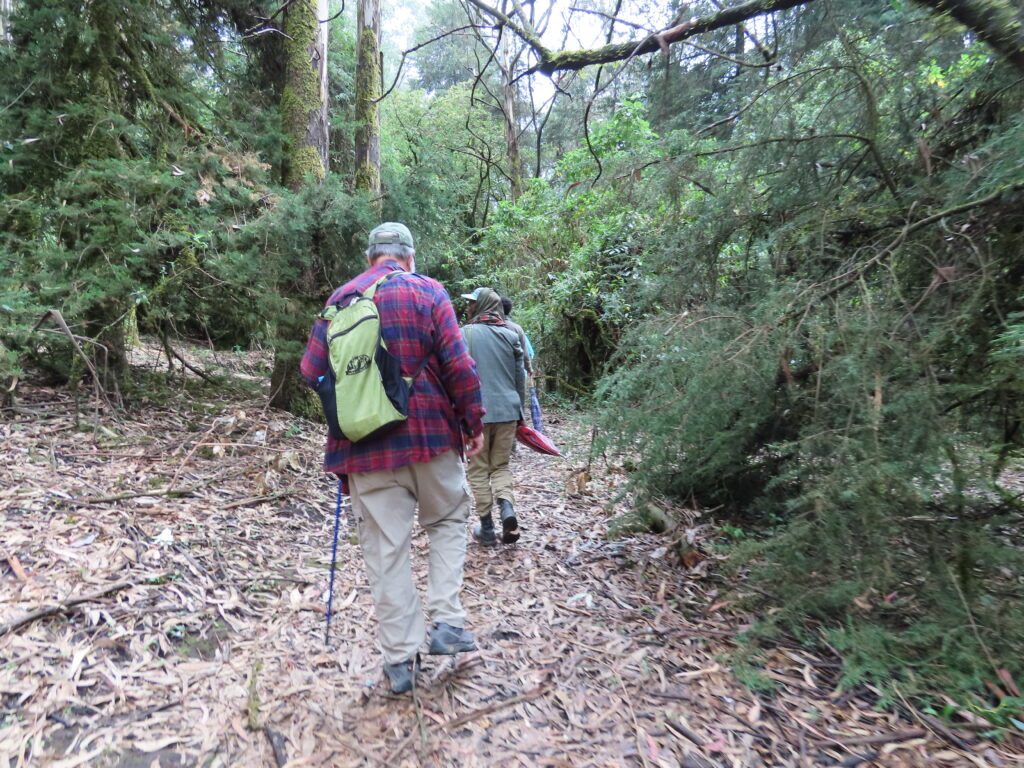
None of us is as young as we once were. Even though our minds like to pretend that we haven’t lost a step, occasional moments of truth send us reminders that things are changing. I received one such notification while hiking in Ethiopia at 11,000 feet. At that height, a person is entering the land of rarefied air. That is probably no big deal to experienced mountain climbers but for me, that is a noticeable difference than my normal day. At that altitude, the effective amount of oxygen taken in is reduced by 37%. Since 21% of oxygen is available at sea level, at 11,000 feet the amount of oxygen available feels like 13.7% because molecules flatten out, meaning less air can be inhaled within each breath.
It is not like I didn’t anticipate or prepare for this experience. For starters, I’d been training all winter and spring near Indiana’s highest point – Hoosier Hill—which is close to my home. It checks in at a whopping 1257 feet above sea level. I have to squint my eyes and hold my head at just the right angle to discern an upward slope in the area. Mostly it looks like flat farm ground with a cluster of trees at the center of the field. As suspected, that wasn’t a very effective training area. So, all those after dinner walks, while enjoyable, were not increasing my lung capacity in any meaningful way.
Judi and I decided to increase the intensity of the workout. We went to a nearby church that had three stories and lots of stairs. We’d spend 20-30 minutes walking up and down those steps. That doesn’t sound like very long, but trust me. It was long enough! It left me huffing and puffing like I was auditioning for the wolf’s part in the Three Little Pigs. Seeing as how we were in a church, we probably would have accomplished more if we’d just spent that time praying! But over the winter, we did see some improvement in our capacity to climb steps. To augment that effort, I rode a stationary bike on off-days. In a DIY effort to mimic reduced oxygen supply, I wore a mask while pedaling. One of the anti-mask arguments during COVID was that it reduced oxygen intake. If that was true, I reasoned, perhaps it would enhance my efforts to prepare for higher altitudes. That tactic did seem to increase my heart and breathing rates a bit.
I probably wouldn’t have given a second thought to the altitude thing except that a Christmas trip to higher elevations in Mexico had surprised me with moments of lightheadedness. That was a new experience, as higher elevations had not troubled me before. The body changes as we age, the ever authoritative “they” say; this could well be an example of such a movement. Or, it could be some other health related thing. Who knows? Eventually, I resigned myself to the fact that my fate was in the hands of a higher power, which I like to believe is always the case. Even so, I didn’t relish the thought of needing medical attention in such a remote location. Hence the attempt at advanced preparation.
The day came, and we arrived at Mt. Simien Park. With over 100,000 acres, and an altitude ranging from 6,000 – 14,800 feet, the area has multiple climate zones and a few unique animal species. Definitely worth a look if you can stomach the experience. The landscape was gorgeous, but the crown jewel of the hike was coming upon and spending time amidst a family of Gelada monkeys. I found them to be mesmerizing, entertained by their daily routines even though they didn’t share a similar interest in our group of eight. They basically ignored us.
Fortunately, I never felt what I would consider sick in these mountains. No headache. No nausea. No vomiting. No loss of appetite. But heavy breathing on uphill climbs, yes. And light headedness, typically only when walking uphill and lasting for about 10 seconds, yes. It mattered not where I walked – woods, trail, gravel roadside, sidewalk – if it was uphill I would walk a bit and then rest 10 seconds until the dizziness ended. Then I walked some more. This didn’t occur every time, but often enough to be annoying. It was during one of those experiences that the thought came to me, “If I ever start a tour company, I’m calling it “Down Hill Tours.” If my grandparents could talk about how they walked 5 miles to school uphill in both directions everyday (and barefoot through two feet of show during the winter!) I don’t know why I can’t start a Down Hill Tour Group where none the hikes require the stress of a strenuous ascent. Shuttles would take us to the highest point and then meet us at the bottom to take us to lunch or a spa or even back to the hotel for a nap. We would miss out on the super-active folks who live by the “no pain, no gain” motto, but I feel sure the downhill idea would catch on, at least with a certain clientele. Who knows? Plus, the shuttle might pick up an occasional school kid who has fallen behind on their daily 5-mile uphill trudge to class! If I go that route, Judi says she may launch her own venture. It would be called Flatland Bike Tours (in the shade). Sign me up! Hills can be a cyclist’s nemesis. Add the blazing sun to the experience, and what had seemed to be a pleasant outing becomes one big sweaty grind.
A few days after our return, Judi and I stopped by that same church. We wanted to walk those steps again, now having had a couple of weeks of activity at a higher altitude. I wouldn’t call it effortless, but the progress achieved in those 14 or so days in comparison with four or five months of preparation at home was amazing. It lends support to the idea that what doesn’t kill you makes you stronger. At least when it comes to reasonable physical challenges that push you beyond your comfort zone.
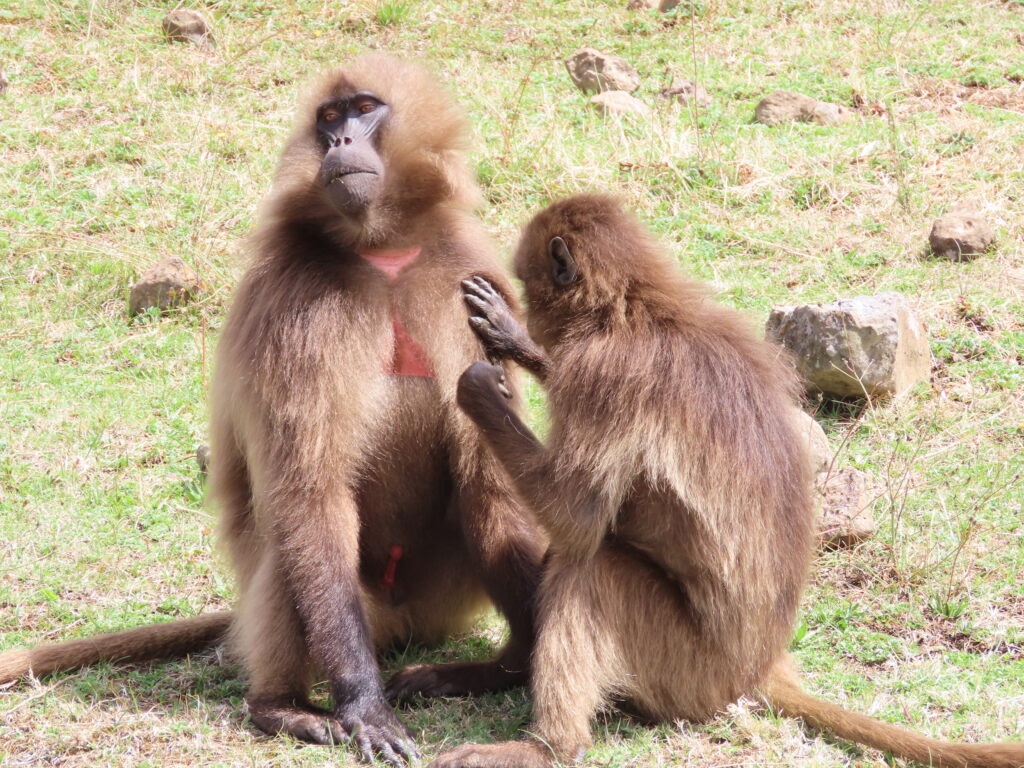
Having had a few weeks to reflect on the high-altitude experience, I realize the difficulties didn’t ruin the adventure. They were annoying, to be sure. They may have slowed my pace a bit at times. But they didn’t prevent having an enjoyable and memorable outing. Perhaps that is the most important reminder in all of this. The huffing, the dizziness, the pain are only one part of a given scenario. Along with it there is beauty (the forests), marvel (monkeys), engagement (conversation) and more that enrich and stimulate pleasure if we care to notice. Some of that would likely never occur without enduring the frustrating pieces. Downhill is nice in many cases, but an obstacle-free experience may well have hidden costs and unrealized consequences.
Who knows? A few obstacles along the way may well change our perspective, teach us new things, and even prepare us for what lies ahead.
