
“To use rightly the time we still have is a sacred obligation.”[1] Those twelve words snagged a backrow seat in my mind and continue to heckle me every now and then. Some days I wonder if they are friend or foe, but suspect they “mean it for my good,” to borrow a favorite phrase from the Joseph stories in Genesis.
The sentence comes from the final chapter of Elton Trueblood’s autobiography. Elton was one of the most influential Quaker thinkers of the 20th century. He appealed to a broad band of believers and seekers, not just Friends. A prolific author, he produced more than thirty books. His punctuality was widely recognized, as he would end any session he led at its appointed end time, seemingly without the need of a timepiece according to some. A professor at Earlham College, he remained active there after his retirement in 1966, choosing to live on campus for several more years. His shadow continued to be noticeable around the college after his relocation to Pennsylvania in his later years. Norwich Lodge, a retreat center located on the back side of campus, had various reminders that it been the location of many Trueblood-led activities. The building in which my office was housed while serving as Dean at Earlham School of Religion, was a two-story brick structure that had once been his home. And one never knew when opening a closet on campus whether or not a large portrait of Elton would be discovered, having been removed from its resting place over a nearby fireplace as new decorative tastes prevailed. Judged by the standards of longevity and production, he embraced the concept of life as a sacred obligation.
A fellowship group known as Yokefellows was one of Elton’s better-known creations. It was intended as a church renewal strategy. The local Richmond, Indiana chapter remained active for many years after Elton’s death, though I don’t know if any manifestations of it are still active.
It was at one such meeting in 1990 that I witnessed him in person for the first and only time. By then, he had relocated from Richmond to Pennsylvania but was returning for a short visit. My father-in-law, who was a United Methodist minister in town, thought I might enjoy hearing Elton speak given his reputation among Friends – particularly since it was rumored that this would likely be his last public engagement. Then approaching the age of 90, he was still impressive. When called upon, he stood. He spoke clearly and concisely, with no notes that I ever observed. And at exactly 1 p.m., he concluded his remarks and sat down.
I left that day grateful for the opportunity to have been present for those final minutes of such a far-reaching public ministry. Only the joke was on me. Whoever thought this would be Elton’s final public presentation had underestimated him. Apparently, his sacred obligation was not yet complete, as there would be other public occasions in his remaining years.
Memories of that experience returned as I read his statement about sacred obligations. The words resonate as a pithy saying, but more than that. They contain some element of truthfulness that calls me to attention. The sacramental quality of life is a concept I learned from Quakers long ago. It influences much of how I see and encounter the world. With that, the idea that life itself is sacred is easy to embrace. But the idea that an obligation exists presents a different twist. It adds a note of responsibility to the Holy One who makes all life possible. It is as though an unknown standard of evaluation looms somewhere in the universe.
Simultaneously, the phrase cuts to the core as it raises the question of what, if anything, is the purpose of life? The writer of Ecclesiastes seemed to think we should eat, drink, and enjoy because tomorrow we die. (That is the play all day every day model). Some forms of Christian piety point in a different direction, insisting that the fundamental purpose of life is to praise and glorify the Creator. If it is the former, perhaps there are no obligations except to one’s self; but if the latter, then we should consider what those obligations are and how they are best fulfilled. Particularly if we have been formed by something like the so-called Protestant work-ethic, it will set our course and propel us forward as long as we are able. In this view, work and sacred obligation are nearly synonymous.
Among my favorite guiding lights on this topic are the words of the prophet Micah 6:8: “What does the Lord your God require of you? Do justice, love kindness, and walk humbly with your God.” Even as imperatives, the verse provides grounding principles that influence the manner in which I engage life. Granted, this leaves open the questions of what constitutes justice or what does kindness look like? Good and useful, they are; but do they alone address the objective of sacred obligation, especially when coupled with a phrase like “use rightly the time?”
I turned 59 years old on my last day of employment as dean. By some standards, I retired early. I had no answer to questions of what I would do next, except to say that I simply wanted to be faithful. Eight plus years later, I have neither regret nor doubt that was the correct decision; but on occasion I wonder how I am doing in the “sacred obligation” department for a few reasons.
First, there is a haunting question that some float my way: are ministers even allowed to retire, as though once called, it is a lifetime sentence (perhaps commitment is a better word!). That is where Friends understanding of ministry is especially beneficial. Ministry is not necessarily equivalent to employment. That is to say, it manifests in many forms, many of which are voluntary. If employment isn’t required for ministry, then retirement as typically understood isn’t an obstacle in fulfilling life’s sacred obligation.
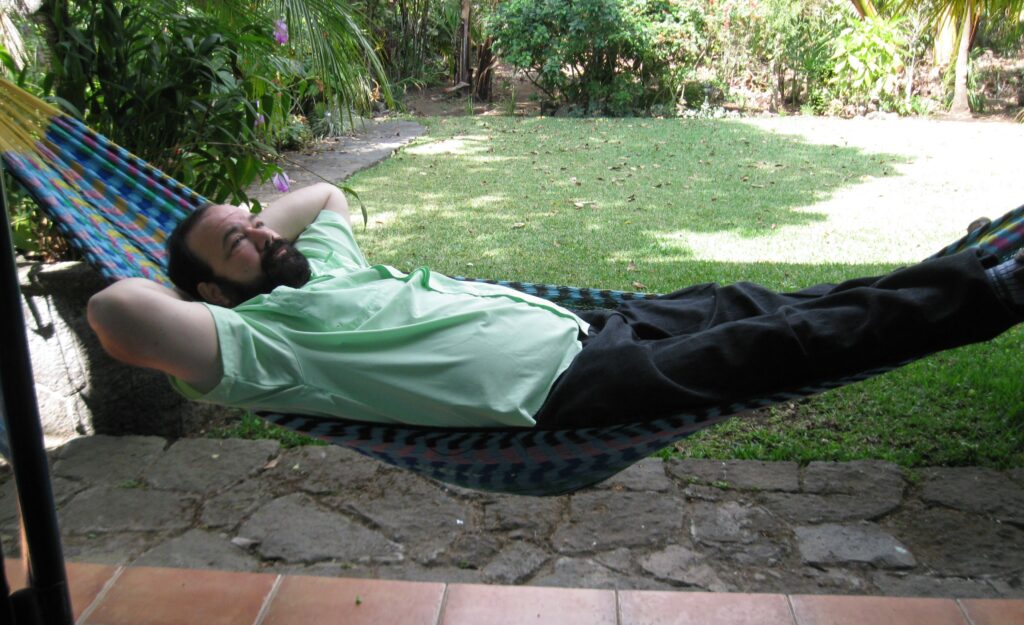
Second, the unstructured schedule of (at least my) retired life provides several opportunities to decide how to invest my time. This is where the “use rightly the time” question rears it head. “Am I doing enough?” is a question I consider from time to time. I have arrived at this answer: Care for the soul matters. For me, at least, there is useful value in some mornings for writing and savoring the latest fresh roast of coffee. Or bicycle rides and new local adventures with my wife. For gardening, whether for food or to share in hospitality. Or even volunteer time to assist with the ministry ideas others are attempting to offer. And, it is even valuable to say “no” at times because, well, care for the soul matters. During the course of life, it is easy to deny and deprive one’s self of this—a practice that serves no one well in the long run.
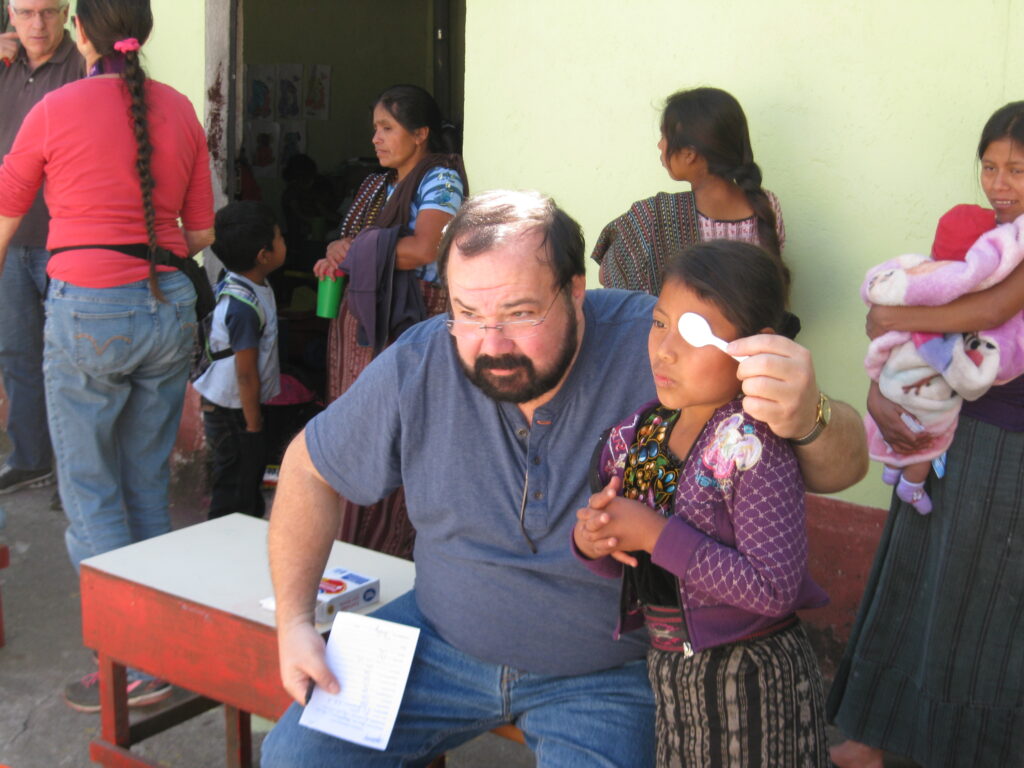
Regardless of age or employment status, I encourage you to ponder the idea of your life as a sacred obligation, especially from the perspective of how your time is spent. The standard to use when making that evaluation may not always be clear; but time after time, I’m confident you will discover it is about faithfulness more than busyness.
[1] Elton Trueblood, “While It is Day; an Autobiography,” (Harper & Row: San Francisco, 1974), p. 152.
